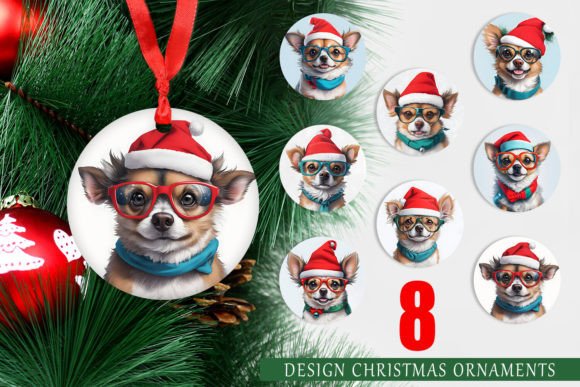
Evaluating the Christmas Ornament 3D Dog Wearing Glasses Design for Custom Holiday Decor
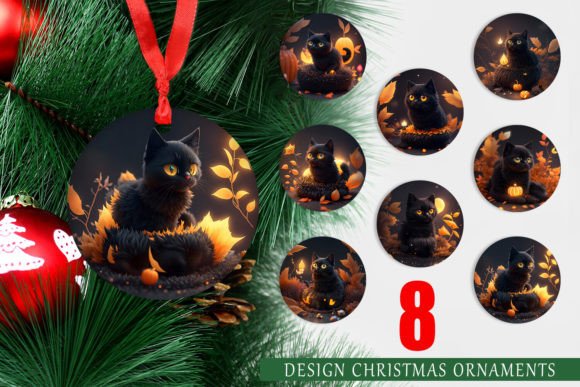
When selecting digital assets for holiday crafting, the distinction between a generic clipart file and a purpose-built printable design significantly impacts the final quality of physical decorations. The Christmas Ornament 3D Dog Wearing Glasses collection represents a specific niche within digital decor: high-resolution, circular compositions intended specifically for ornament production rather than general graphic design. Understanding the technical specifications and practical applications of this set of eight designs allows crafters to determine if this resource aligns with their production capabilities and aesthetic goals compared to other available alternatives.
Technical Specifications and Print Fidelity
The primary value proposition of any printable ornament design lies in its resolution relative to its physical print size. This specific collection provides files at 1500x1500 pixels with a density of 300 DPI (dots per inch). Mathematically, this translates to a maximum high-quality print area of exactly 5x5 inches. For standard round ornaments, which typically range from 3 to 4 inches in diameter, this specification offers a necessary buffer. Many lower-resolution alternatives found on general stock sites may appear crisp on screen but result in pixelation or blurriness when printed on glossy cardstock or ceramic transfer paper. The 300 DPI standard ensures that the simulated 3D shading and fine details of the glasses remain sharp during the printing process.
However, users must recognize the limitations of this fixed dimension. If your project requires ornaments larger than 5 inches, such as oversized wall hangings or large ceramic plates, these PNG files will lose fidelity when scaled up. In contrast, vector-based formats (SVG/EPS) offer infinite scalability but often lack the complex raster shading required for realistic 3D effects. Therefore, the tradeoff here is accepting a size ceiling in exchange for superior texture and depth that vectors cannot easily replicate.
File Format Considerations: PNG vs. Alternatives
The choice of PNG format for this set is deliberate. Unlike JPEGs, which use lossy compression and often introduce artifacts around high-contrast edges, PNGs utilize lossless compression. This is critical for ornament designs where clean lines define the "3D" illusion. Furthermore, these files include transparency support, allowing the circular design to be placed onto colored backgrounds or different ornament shapes without a white bounding box. When comparing this to pre-cropped PDF templates, the individual PNG approach offers greater flexibility for users who wish to arrange layouts manually or apply the design to non-standard surfaces, though it requires more active file management than a ready-to-print document.
Aesthetic Distinctions and Style Comparison
The visual language of the Christmas Ornament 3D Dog Wearing Glasses differs markedly from traditional flat illustration or photorealistic imagery. The "3D" descriptor in this context refers to a stylized digital rendering technique that mimics clay, plastic, or puffy paint textures through lighting and shadow manipulation. This creates a tactile appearance on a two-dimensional surface. When evaluating this against other styles, consider the following distinctions:
- Versus Flat Vector Art: Flat designs are cleaner and more modern but can feel sterile on holiday decor. The 3D style adds warmth and whimsy, making it better suited for family-centric or nostalgic themes.
- Versus AI-Generated Imagery: While AI tools can generate similar concepts, they often struggle with consistent text legibility and anatomical correctness across a set. A curated set of eight ensures stylistic consistency and intentional composition that generative models frequently miss.
- Versus Vintage Clipart: Public domain vintage art offers nostalgia but often suffers from low resolution and inconsistent color palettes. This digital collection provides uniform color grading and modern print standards while retaining a playful character.
The inclusion of glasses as a recurring motif adds a layer of personality that generic dog ornaments lack. This specificity makes the design particularly suitable for pet owners whose animals have distinct personalities or for creating themed trees dedicated to pets. However, for those seeking solemn, religious, or ultra-minimalist Scandinavian aesthetics, this whimsical 3D style may clash with existing decor. It is essential to evaluate whether the playful tone matches the broader environment where the ornaments will be displayed.
Practical Application and Material Compatibility
Digital files do not exist in a vacuum; their success depends entirely on the output medium. The Christmas Ornament 3D Dog Wearing Glasses set is optimized for specific crafting workflows. Evaluating your intended materials against the design characteristics helps prevent wasted resources.
Best-Fit Materials
The simulated depth in these designs works best on substrates that enhance the illusion of dimensionality. Matte cardstock absorbs light, flattening the 3D effect slightly, while satin-finish photo paper or luster paper reflects light in a way that complements the digital shading. For sublimation printing on ceramic or metal discs, the vibrant colors and high contrast of the 3D render translate exceptionally well, as the heat transfer process preserves the gradient details. Users planning to use these designs for shrink plastic (Shrinky Dinks) should note that colors darken significantly during baking; the bright palette of this set generally compensates well for that shift, whereas darker vintage designs might become muddy.
Potential Limitations
Crafters using low-ink home printers should be aware that heavy coverage areas in 3D renders consume significant ink. Additionally, because the design relies on subtle gradients to create the 3D effect, banding may occur on entry-level inkjet printers lacking sufficient color channels. Laser printers handle the text and line work beautifully but sometimes struggle with the smooth gradients necessary for the 3D look. Testing a single print on your chosen material before committing to the full set of eight is a prudent step that many overlook when switching between digital preview and physical output.
Decision Framework: When to Choose This Resource
Selecting the right digital asset involves balancing convenience, quality, and cost. The following framework assists in determining if this specific collection is the optimal choice for your current needs.
Choose this set if:
- You require immediate, high-resolution files for standard-sized (3-5 inch) ornaments.
- Your project demands a cohesive set where all elements share identical lighting, style, and color temperature.
- You prefer the flexibility of individual PNG files over locked PDF templates.
- The whimsical, anthropomorphic pet theme aligns with your gift recipient or personal taste.
- You possess printing equipment capable of handling 300 DPI saturation levels.
Consider alternatives if:
- You need commercial licensing for mass-produced retail goods (always verify the specific license terms included with the download).
- Your ornaments exceed 5 inches in diameter, requiring vector scalability.
- You prefer editable source files to change the dog breed, glass color, or background elements.
- Your aesthetic leans toward minimalist line art or strict realism rather than stylized 3D rendering.
- You lack access to quality printing and intend to use professional print services that require CMYK color profiles (these PNGs are likely RGB).
Evaluating Value Beyond the Visual
When comparing digital ornament sets, price and visual appeal are only part of the equation. The utility of the Christmas Ornament 3D Dog Wearing Glasses collection also stems from its compositional structure. Circular designs are inherently more challenging to create than square ones because the artist must account for negative space along the curved perimeter. Poorly designed circular clipart often has elements awkwardly cropped or centered too high/low. A professionally composed set centers the focal point appropriately for an ornament hook placement, ensuring the dog’s face isn’t obscured when the decoration hangs vertically.
Furthermore, having a set of eight provides enough variety for a small tree or a complete gift set for a family with multiple pets, without the redundancy that comes with larger packs of lower-quality filler images. In the landscape of digital crafting resources, focused collections often yield better project outcomes than massive bundles of disparate assets. By prioritizing technical adequacy and thematic coherence over sheer volume, crafters can achieve professional-looking results that withstand close inspection on the holiday tree.
Ultimately, the decision rests on matching the asset's inherent properties to your specific production constraints. The 1500x1500 px, 300 DPI specification serves as a reliable benchmark for quality, while the 3D dog-with-glasses motif fills a specific emotional niche. Weighing these factors against your equipment, material choices, and aesthetic preferences ensures that the digital file translates successfully into a tangible holiday keepsake.