Evaluating 3D White Flower Car Coaster Sublimation for Custom Automotive Accessories
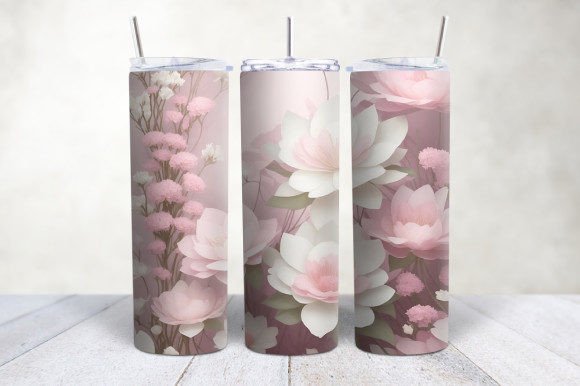
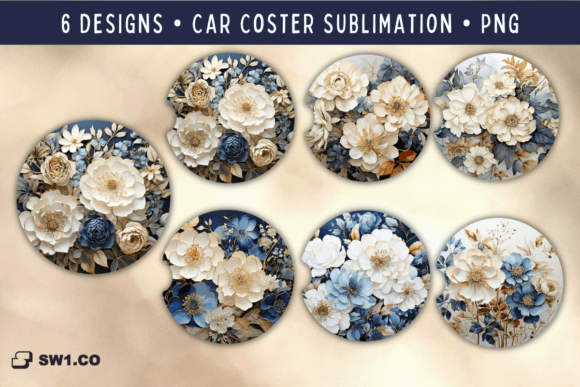
When selecting digital assets for personalized automotive accessories, the distinction between standard flat graphics and specialized 3D white flower car coaster sublimation designs is significant. This specific category of digital art is engineered not merely as a decorative overlay but as a functional component of the dye-sublimation process. Unlike generic floral clipart, these files are optimized for the circular geometry and absorbent surface of ceramic or neoprene coasters. The "3D" designation in this context refers to visual depth created through shading, highlights, and shadow rendering within a two-dimensional raster image, simulating texture and dimensionality that translates effectively onto porous substrates.
For creators and small business owners comparing inventory options, understanding the technical specifications of high-quality 3D white flower sublimation PNG designs is essential for production efficiency. These assets typically arrive in a compressed ZIP file containing instant digital downloads. A standard professional pack often includes 12 PNG files featuring 8 unique designs, sized precisely at 2.56 inches by 2.56 inches (768 x 768 pixels) at 300 DPI. This resolution is the industry baseline for ensuring that the intricate petal details and simulated shadows remain crisp after heat transfer. When evaluating whether this specific asset type fits your production workflow, it is necessary to weigh its specialized utility against broader graphic resources.
Technical Distinctions: Raster vs. Vector for Sublimation
A primary decision factor when sourcing 3D white flower car coaster sublimation files is understanding the format limitations. These designs are exclusively raster-based PNGs, not SVG files. This distinction fundamentally alters how they can be used compared to vector alternatives. Vector graphics (SVG) are mathematical paths ideal for vinyl cutting, laser engraving, and infinite scaling without quality loss. However, the photorealistic shading required to create a convincing 3D floral effect cannot be replicated easily with vectors.
If your project involves cutting machines like Cricut or Silhouette to create layered vinyl decals, these sublimation PNGs are unsuitable because they are not layered for cutting. They are single-layer, flattened images designed solely for ink transfer. Conversely, if your goal is full-color printing on coated hardboard, ceramic, or fabric coasters, the raster format is superior. The 300 DPI resolution ensures that the gradient transitions defining the "3D" look do not pixelate during the heating process. Users must assess their primary output method: choose vectors for shape-based crafting and high-resolution PNGs for color-rich sublimation printing.
Sizing Considerations and Print Area Compatibility
The specified dimensions of 2.56 x 2.56 inches serve a practical purpose in the car coaster niche, yet this fixed sizing requires careful evaluation against your blank inventory. Standard car cup holders vary significantly by vehicle make and model, ranging from compact sedan inserts to oversized truck console cups. While 2.56 inches is a versatile median size that fits most standard automotive cup holders, it may leave gaps in larger wells or require trimming for smaller ones.
Compared to scalable vector designs or larger 4-inch coaster templates, a fixed 768 x 768 PX canvas offers less flexibility. Upscaling a raster image beyond its native resolution risks introducing artifacts and blurriness, which destroys the illusion of three-dimensionality. Downscaling is generally safe but reduces the printable area. For producers who service a diverse clientele with varying vehicle types, relying solely on this specific size may necessitate maintaining multiple design libraries. However, for those focusing on standard passenger vehicles or seeking a "one-size-fits-most" solution for e-commerce listings, this pre-sized format eliminates the guesswork of margin setup and bleed calculation.
Visual Depth and Aesthetic Performance
The market for floral car accessories is saturated, making aesthetic differentiation a key competitive advantage. Standard flat vector flowers often appear sterile or cartoonish on textured coaster surfaces. High-quality 3D white flower sublimation PNG designs address this by incorporating environmental lighting cues. The white pigment in sublimation ink is actually the absence of ink (relying on the white substrate), meaning the perception of white relies entirely on the contrast provided by surrounding shadows and mid-tones.
When comparing these specialized 3D renders against generic stock photography, consider the background transparency. These PNGs feature transparent backgrounds specifically to allow the white flower to interact with the coaster's base color or to be placed over colored gradients. Generic photos often have white backgrounds that create unprintable boxes or require tedious masking. The pre-masked nature of these digital files streamlines production. Furthermore, the artistic style tends toward hyper-realism or stylized relief, which photographs better in product mockups than flat illustrations. For sellers relying on visual marketing, the inherent depth of these files can lead to higher perceived value and click-through rates.
Workflow Integration and Skill Requirements
Acquiring an instant digital download for 3D white flower car coaster sublimation assumes a baseline competency in heat press technology and image editing software. Because these are digital-only items with no physical components included, the burden of color management and press settings falls entirely on the user. Unlike purchasing pre-printed transfers, raw PNG files require integration into a print layout.
Users should evaluate their current software ecosystem. While these files open in most programs, achieving optimal results often requires basic manipulation in Photoshop, Affinity Photo, or GIMP to adjust brightness or contrast based on specific paper and ink combinations. Sublimation inks often print duller than they appear on screen and only achieve vibrancy after pressing. If you lack the ability to perform test prints or color corrections, pre-made physical transfers might be a safer alternative despite the higher per-unit cost. However, for established workflows where color profiles are already dialed in, digital PNG packs offer the lowest marginal cost per unit and immediate access to new designs without shipping delays.
Cost-Benefit Analysis of Digital Asset Packs
The economic proposition of purchasing a 12-file ZIP pack versus individual designs or subscription services depends on volume and variety needs. A pack containing 8 unique designs across 12 files suggests some variation or duplication intended for testing different layouts. For high-volume producers, the cost-per-design of a bundled ZIP is significantly lower than licensing individual assets. This bulk acquisition model supports rapid catalog expansion, allowing sellers to list multiple coaster variations quickly.
However, compare this against subscription-based design platforms if you require constant novelty rather than a cohesive collection. A static pack provides ownership and perpetual commercial use rights (typically, though always verify the specific license), whereas subscriptions cease to provide value once payments stop. For businesses building a permanent core collection of automotive accessories, owning the high-quality 3D white flower sublimation PNG design files outright protects against future price increases or platform shutdowns. The tradeoff is a lack of automatic updates; if trends shift away from realistic white florals toward abstract patterns, the asset pack remains static.
Determining Fit: When to Choose Specialized Sublimation Files
Selecting 3D white flower car coaster sublimation assets is the right strategic move when your production goals align with the strengths of raster-based dye transfer. This option excels for:
- Photorealistic Product Lines: When the brand identity relies on elegance, detail, and texture rather than bold, simple shapes.
- Standardized Inventory: When your blank coasters consistently match the 2.56-inch form factor, minimizing waste and resizing labor.
- Sublimation-Exclusive Workflows: When you have no need for cut files and want to avoid paying for multi-format bundles that include unused SVGs.
- Immediate Production Needs: When instant digital delivery allows you to fulfill custom orders or restock bestsellers without lead times.
Conversely, alternative resources may be preferable if you require multi-craft versatility (e.g., using the same design for vinyl stickers and embroidery), need scalable formats for large-format printing, or lack the equipment to manage color-critical sublimation processes. Additionally, if your target demographic prefers minimalist line art or typography over detailed botanical realism, the visual weight of 3D rendered flowers may clash with your existing catalog.
Ultimately, the value of these digital assets lies in their specialization. They solve a specific problem—providing print-ready, correctly sized, visually complex imagery for a niche automotive accessory. By verifying that your equipment, blank sizes, and aesthetic direction align with the 768 x 768 PX, 300 DPI parameters, you can integrate these files as a reliable component of a professional sublimation workflow. Careful evaluation of these technical and commercial factors ensures that the investment in digital design resources yields tangible returns in product quality and production efficiency.