3D Red Poppies Flower Tumbler 2: Integrating Digital Assets into Sublimation Workflows
In the competitive landscape of custom drinkware production, the distinction between a generic product and a premium offering often lies in the quality and depth of the design. The 3D Red Poppies Flower Tumbler 2 serves as a specialized digital asset designed to elevate sublimation projects through high-resolution imagery and precise dimensional formatting. For creators, small business owners, and hobbyists, this PNG file is not merely a decorative element; it is a functional component of a broader manufacturing workflow. Understanding how to leverage this specific 9.06 in x 8.11 in resource effectively requires a practical approach to file management, color profiling, and press execution.
Defining the Asset in a Production Context
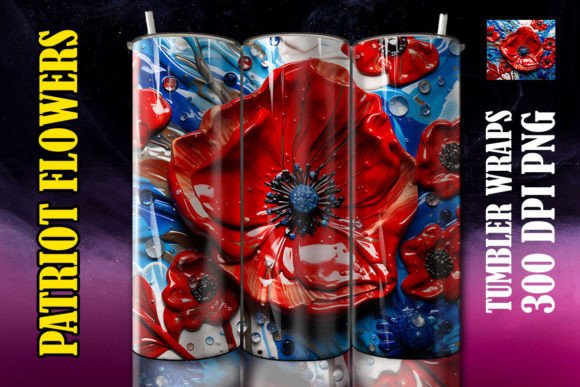
The 3D Red Poppies Flower Tumbler 2 is a digital wrap specifically engineered for tapered tumblers. Unlike flat 2D patterns, this asset utilizes shading and perspective techniques to simulate three-dimensional depth when applied to a curved surface. This visual effect is critical for professionals aiming to create products that appear hand-painted or embossed rather than simply printed. The file is delivered as part of a ZIP bundle containing several PNG variations, all standardized at 300 DPI. This resolution is the industry baseline for sublimation, ensuring that the intricate details of the poppy petals remain crisp after the heat transfer process.
From a workflow perspective, this asset fits into the pre-production phase. It bridges the gap between conceptual design and physical output. Rather than spending hours rendering floral elements or adjusting perspective manually in raster software, users can integrate this pre-formatted wrap directly into their template library. This efficiency allows entrepreneurs to focus on batch processing, marketing, and customer fulfillment rather than repetitive design tasks. The standardized sizing of 9.06 x 8.11 inches targets specific tumbler blanks, reducing the trial-and-error often associated with resizing generic artwork.
Pre-Press Preparation and File Management
Successful implementation begins before the heat press is turned on. Because this is an instant digital download, organization is paramount. Upon receiving the ZIP file, extract the contents immediately and rename the files according to your internal naming convention. Relying on default filenames can lead to version control issues later, especially if you acquire multiple floral wraps. Store the master PNGs in a dedicated "Master Assets" folder that remains untouched, creating working copies for daily use. This prevents accidental overwrites or corruption of the original 300 DPI source material.
Color management is the next critical step in preparing the 3D Red Poppies Flower Tumbler 2 for production. Monitors display colors in RGB light, while sublimation printers use CMYK ink. Without proper profiling, the vibrant reds of the poppies may print as dull maroons or shift toward orange. Before committing to a full production run, print a test swatch using your specific printer, ink, and paper combination. Compare the physical output against the digital file under consistent lighting. If adjustments are necessary, modify your printer’s ICC profile or apply a curve adjustment layer in your editing software to compensate for the specific substrate you are using.
Verifying dimensions is equally important. While the file is listed as 9.06 in x 8.11 in, manufacturing tolerances on tumbler blanks vary. Always measure your specific blank’s circumference and height. If your tumbler differs slightly from the standard size, use content-aware scaling or warp tools to adjust the digital wrap without distorting the central floral motif. Maintaining the aspect ratio of the 3D effect is essential; stretching the image disproportionately will flatten the simulated depth, negating the primary benefit of using this specific asset.
Execution Strategies During Sublimation
During the pressing phase, the interaction between the digital design and the physical medium determines the final quality. The 3D Red Poppies Flower Tumbler 2 relies on seamless alignment to maintain its illusion. When positioning the wrap, ensure the seam line falls in a visually neutral area, typically opposite the primary focal point of the flower arrangement. Use heat-resistant tape to secure the paper tightly against the curve. Any gap between the paper and the tumbler wall will result in ghosting or blurring, which is particularly detrimental to 3D-style graphics where edge definition creates the perception of depth.
Temperature and dwell time must be calibrated for the density of the ink coverage. Floral designs with deep reds and shadowed areas often require different press settings than lighter, pastel graphics. Excessive heat can cause the red dyes to bleed into adjacent white spaces, muddying the 3D effect. Conversely, insufficient heat may leave the transfer looking washed out. Consult your blank manufacturer’s specifications as a starting point, but treat the 3D Red Poppies Flower Tumbler 2 as a unique variable. Document your successful settings in a production log. Over time, this data becomes a valuable reference that ensures consistency across hundreds of units, regardless of who operates the press.
For users employing shrink wraps versus silicone bands, consider how pressure distribution affects the outcome. Silicone bands generally provide more even pressure for tapered vessels, which is advantageous for maintaining the integrity of a full-wrap 3D design. If using a convection oven, rotate the tumbler halfway through the cycle to prevent hot spots that could alter color saturation unevenly. These process-oriented decisions directly impact whether the finished product looks professional or amateurish.
Post-Production Quality Control and Business Integration
After the tumbler has cooled and the paper is removed, conduct a systematic quality check. Inspect the seam line first, as this is the most common failure point for wrap designs. Evaluate the color vibrancy against your approved test swatch. Check for any banding or streaking that might indicate printer head issues or uneven pressure. The 3D Red Poppies Flower Tumbler 2 should exhibit smooth gradients and sharp petal edges. If defects are found, trace them back to the specific stage of your workflow—file prep, printing, or pressing—to isolate the root cause rather than discarding materials without analysis.
Integrating this asset into a business model extends beyond manufacturing. High-quality product photography is essential for selling items featuring this design. Because the graphic simulates 3D depth, flat studio lighting can sometimes diminish the effect. Use directional lighting to enhance the shadows and highlights inherent in the file, reinforcing the textured appearance in marketing images. When listing the product, accurately describe the design as a digital-printed wrap to manage customer expectations regarding texture. Transparency builds trust and reduces return rates.
Consider the long-term utility of this asset in your catalog. Seasonal trends shift, but classic floral motifs like red poppies retain relevance year-round. By mastering the technical application of this specific wrap now, you build muscle memory and process documentation that transfers to other 3D assets in your library. The skills developed in aligning, pressing, and troubleshooting this design create a foundation for handling more complex wraps in the future. Efficiency compounds; the tenth tumbler takes a fraction of the time of the first because the workflow has been refined through practical experience.
Technical Specifications and Compatibility Notes
To maximize the value of the 3D Red Poppies Flower Tumbler 2, users must adhere to specific technical parameters. The following specifications define the operational boundaries of this digital asset:
- File Format: PNG with transparent background support, allowing for layering over solid colors or gradient bases if customization is desired.
- Resolution: 300 DPI at actual print size. Do not upscale beyond 100% scale, as interpolation will soften the 3D details and introduce pixelation.
- Dimensions: 9.06 inches wide by 8.11 inches tall. This corresponds to standard 20oz skinny tumbler specifications but must be verified against individual blanks.
- Delivery Method: Instant digital download via ZIP archive. No physical product is shipped.
- Software Compatibility: Works with Photoshop, GIMP, Affinity Photo, Canva (Pro recommended for best export quality), and RIP software used in sublimation workflows.
Understanding these constraints prevents wasted resources. Attempting to use this file on a significantly larger vessel, such as a 30oz tumbler, without accepting a loss in detail is not recommended. Similarly, users unfamiliar with sublimation fundamentals should invest time in learning color profiles and press mechanics before utilizing premium assets. The 3D Red Poppies Flower Tumbler 2 is a tool for those ready to execute; its value is realized only through competent application.
Optimizing Workflow for Consistent Results
Consistency is the hallmark of a sustainable creative business. When incorporating the 3D Red Poppies Flower Tumbler 2 into regular production, establish a standard operating procedure (SOP). This document should outline every step from file retrieval to final packaging. Include screenshots of correct placement, notes on specific press temperatures, and photos of acceptable versus unacceptable seams. Sharing this SOP with team members or employees ensures that the quality associated with this design remains constant, even during high-volume periods or staff transitions.
Batch processing further enhances efficiency. Print multiple wraps simultaneously if your printer bed allows, optimizing paper usage and reducing setup time. Group pressing sessions by design type to maintain stable oven or press temperatures. Keep a digital inventory of printed wraps if you prefer to print ahead of demand, storing them in a cool, dark environment to prevent premature fading. These logistical considerations transform a single digital file into a reliable revenue stream.
Ultimately, the 3D Red Poppies Flower Tumbler 2 represents an intersection of art and industry. It provides the aesthetic appeal customers desire while offering the technical standardization producers need. By approaching this asset with a mindset focused on preparation, precision, and process improvement, creators can deliver exceptional products that stand out in a crowded marketplace. The investment is not just in the file itself, but in the refinement of the skills required to bring it to life.