3D Pop Art Fusion Corgi Tumbler Wrap: Integrating Digital Assets into Sublimation Workflows
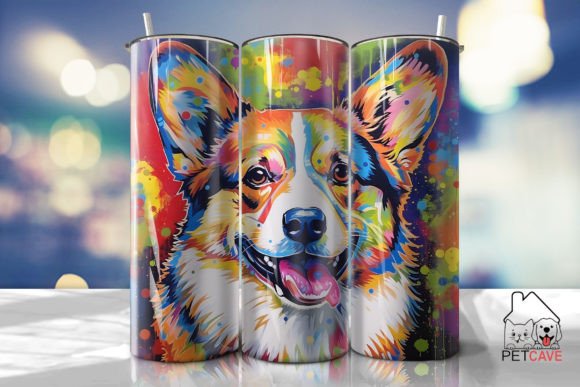
In the competitive landscape of custom drinkware production and digital design, efficiency relies heavily on asset readiness. The 3D Pop Art Fusion Corgi Tumbler Wrap represents a specific category of high-resolution digital resources designed to streamline the transition from concept to physical product. For creators, small business owners, and hobbyists operating within the sublimation or print-on-demand space, understanding how this asset fits into a broader production workflow is essential for maintaining quality and reducing turnaround times. This wrap is not merely an image; it is a pre-calculated component intended to eliminate technical friction during the printing phase.
The core value of this digital asset lies in its dual-format provision. By supplying both straight and tapered variations at 300 DPI, the file addresses the two most common manufacturing variables in 20oz tumbler production. This eliminates the need for designers to manually distort images or guess at taper ratios, which are frequent points of failure in custom merchandise workflows. Integrating this wrap into your process requires a clear understanding of file management, color profiling, and substrate compatibility to ensure the final output matches the digital proof.
Asset Specifications and Technical Integration
Before initiating any print job, verifying technical specifications is a critical quality control step. This listing provides a ZIP file containing two distinct High-Resolution PNG files. Both are formatted at 9.3” x 8.2” with a resolution of 300 DPI. This dimension is specifically calibrated for standard 20oz skinny tumblers, but the inclusion of two geometry types dictates how you should approach your project planning.
- Straight Format (9.3” x 8.2”): Designed for tumblers with uniform cylindrical walls. This file maintains equal width from top to bottom and is ideal for standard sublimation blanks that do not narrow toward the base.
- Tapered Format (9.3” x 8.2”): Engineered for tumblers that feature a gradual narrowing. Using the straight version on a tapered cup results in distorted imagery near the base, while using the tapered version on a straight cup creates unwanted white gaps. Selecting the correct geometry before printing prevents material waste.
It is vital to note that this product consists exclusively of digital files. No physical products will be shipped, and there are no cutting files or SVGs included. This distinction places the asset firmly in the realm of raster-based printing processes such as sublimation, waterslide decal application, or regular inkjet/laser printing. Users attempting to use this for vinyl cutting or laser engraving will find the format incompatible. Recognizing these boundaries early prevents workflow bottlenecks and ensures the asset is applied only where it performs optimally.
Pre-Production Workflow and File Management
Effective integration of the 3D Pop Art Fusion Corgi Tumbler Wrap begins with organized digital asset management. Upon downloading the ZIP file, immediate extraction and renaming are recommended best practices. Rather than leaving files with generic names, rename them to reflect their geometry and intended use case, such as "Corgi_PopArt_Straight_20oz.png" and "Corgi_PopArt_Tapered_20oz.png." This level of organization reduces cognitive load during high-volume production runs and minimizes the risk of selecting the wrong file variant.
Color management is another pre-production factor that directly impacts outcomes. Because colors may vary depending on devices and printers, relying solely on screen appearance is insufficient. Professional workflows incorporate soft-proofing using the specific ICC profile associated with your printer and ink combination. Before committing to a full production run, print a test strip on your chosen transfer paper. The vibrant nature of pop art fusion styles often pushes color gamut limits; verifying saturation and contrast on physical media ensures the 3D effect translates correctly without banding or muddiness.
For users employing waterslide decals rather than sublimation, the preparation phase differs slightly. While the 300 DPI resolution is sufficient for crisp detail, waterslide applications require consideration of background opacity. Since this is a PNG with potential transparency or white backgrounds, verify whether your target tumbler color complements the design. Dark tumblers may require an additional white toner layer or opaque backing if the printer does not support white ink, whereas light tumblers allow the pop art colors to stand independently.
Execution Strategies for Consistent Results
During the execution phase, the interaction between the digital wrap and the physical substrate determines success. For sublimation users, alignment is paramount. The 9.3” width allows for a slight overlap seam on most 20oz tumblers. When positioning the 3D Pop Art Fusion Corgi Tumbler Wrap, utilize heat-resistant tape to secure the seam in a discreet location. The "fusion" aspect of the design often includes depth cues and shadowing; misaligning the seam can break the 3D illusion, making the distortion obvious. Taking thirty extra seconds to align pattern elements across the seam preserves the visual integrity of the artwork.
Temperature and pressure settings should be validated against the specific blank being used, not just the general recommendations for sublimation. Pop art designs typically feature bold lines and saturated fields of color. Inconsistent pressure can result in ghosting or faded areas that disrupt the graphic impact. If producing multiple units, document your successful settings immediately. Creating a standardized operating procedure (SOP) for this specific wrap ensures that the hundredth tumbler looks identical to the first, which is crucial for batch orders or inventory restocking.
For those using this asset in a mixed-media workflow, consider how the 3D Pop Art Fusion Corgi Tumbler Wrap interacts with other design elements. Because the file is a high-resolution PNG, it can serve as a central focal point within a larger composition in software like Photoshop or Canva. However, avoid upscaling beyond the native 300 DPI dimensions. Stretching the 9.3” x 8.2” canvas degrades the sharpness required for the 3D effect to function visually. If customization is needed, add text or logos as separate layers above the base wrap rather than altering the source pixels.
Post-Production Quality Control and Client Expectations
After the transfer process, quality control extends beyond checking for physical defects. Evaluate the color accuracy against your digital proof. As noted in the product details, device variance is inevitable. Establishing a tolerance threshold for color shift helps determine when a reprint is necessary versus when a variation is acceptable. For professional sellers, photographing the finished tumbler under consistent lighting creates a feedback loop. Comparing the final product photo to the original digital file highlights systemic issues with printer profiles or heat press calibration that can be corrected for future runs.
Managing client expectations is also part of the post-production workflow when selling items featuring this design. Because the 3D Pop Art Fusion Corgi Tumbler Wrap is a stylized digital interpretation, customers should understand that the printed result is a flat representation of depth. Clear product photography that shows the tumbler from multiple angles helps bridge the gap between digital expectation and physical reality. This transparency reduces return rates and builds trust in your brand’s attention to detail.
Long-Term Asset Utilization and Efficiency
Integrating this wrap into your long-term resource library maximizes return on investment. Beyond direct sales, the 3D Pop Art Fusion Corgi Tumbler Wrap serves as excellent content for marketing materials, mockups, and portfolio pieces. Its bold aesthetic captures attention in social media feeds, making it useful for driving engagement even when not actively promoting a specific sale. Store the master files in a cloud backup system with metadata tags indicating "20oz," "Sublimation," "Pop Art," and "Corgi." This semantic tagging allows for rapid retrieval months or years later when trends cycle back or when fulfilling repeat customer requests.
Efficiency also comes from knowing what this product is not. Reiterate internally or to team members that no SVG files are included. Attempting to vectorise this raster art for cutting machines wastes billable hours. Keep this asset strictly within raster-printing workflows. By respecting the intended use case and technical parameters, the 3D Pop Art Fusion Corgi Tumbler Wrap becomes a reliable, plug-and-play solution that enhances productivity rather than complicating it.
Ultimately, successful implementation of digital wraps depends on treating them as precision tools rather than generic clipart. From the moment of download through final quality inspection, every step should reinforce the technical advantages provided by the dual-format, high-resolution specification. Whether you are a solo creator fulfilling custom orders or a marketer developing product lines, aligning your process with the asset’s capabilities ensures consistent, professional results that satisfy both creator standards and customer expectations.